
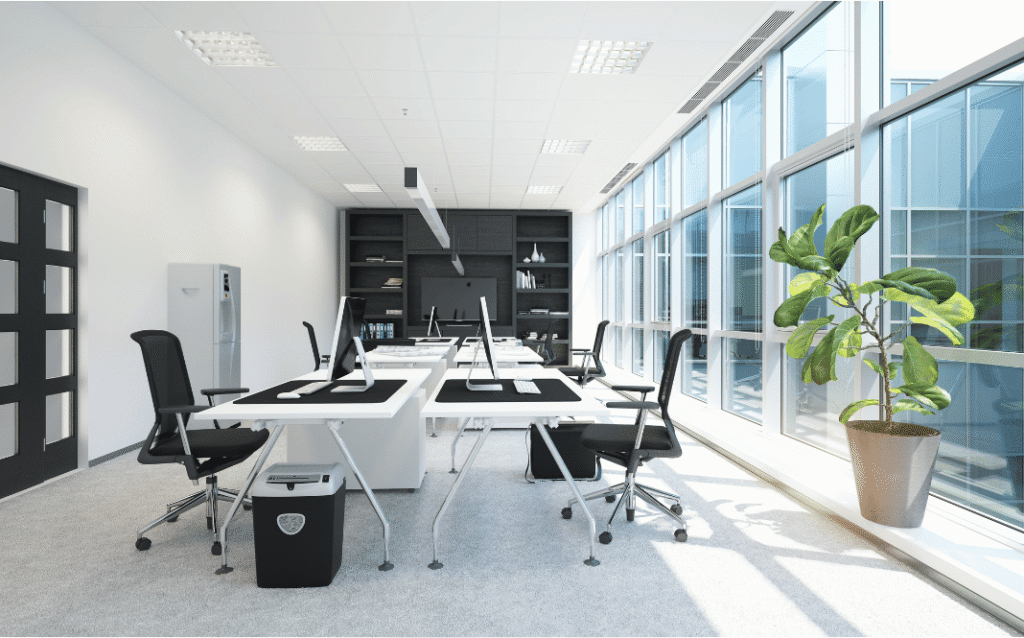
The right office cleaning schedule depends on your business size, employee count, customer traffic, and industry. High-traffic businesses like medical offices and large corporate workplaces typically need daily cleaning, while smaller, low-traffic offices can maintain cleanliness effectively with weekly service.
Every business has different cleaning needs. A 200-person corporate office and a two-person accounting firm both need to be clean—but they don’t need to be cleaned the same way, or at the same frequency.
Choosing the right cleaning schedule comes down to a mix of factors: office size, employee count, industry requirements, and how many people walk through your doors each day. Get it right, and you’ll maintain a professional appearance, a healthier workplace, and lower long-term facility costs. Get it wrong, and you’re either overspending on cleaning you don’t need—or letting grime build up in ways that cost more to fix later.
This guide breaks down what daily and weekly office cleaning each involve, which schedule suits which business type, and how a hybrid approach can offer the best of both worlds.
Why Does Office Cleaning Frequency Matter?
A clean workplace does more than look good. Research consistently links clean work environments to higher employee productivity, fewer sick days, and stronger first impressions with clients and visitors. According to the American Cleaning Institute, employees are more engaged and focused in clean, organized environments.
Beyond productivity and perception, cleaning frequency directly affects building maintenance costs. Dirt and grime that builds up on flooring, furniture, and surfaces accelerates wear. Regular cleaning protects those assets—extending their lifespan and reducing replacement costs over time.
In short, cleaning frequency isn’t just a hygiene decision. It’s a business one.
What Does Daily Office Cleaning Include?
Daily cleaning focuses on high-use areas that accumulate dirt, bacteria, and clutter quickly. Here’s what’s typically covered:
High-Touch Surface Cleaning
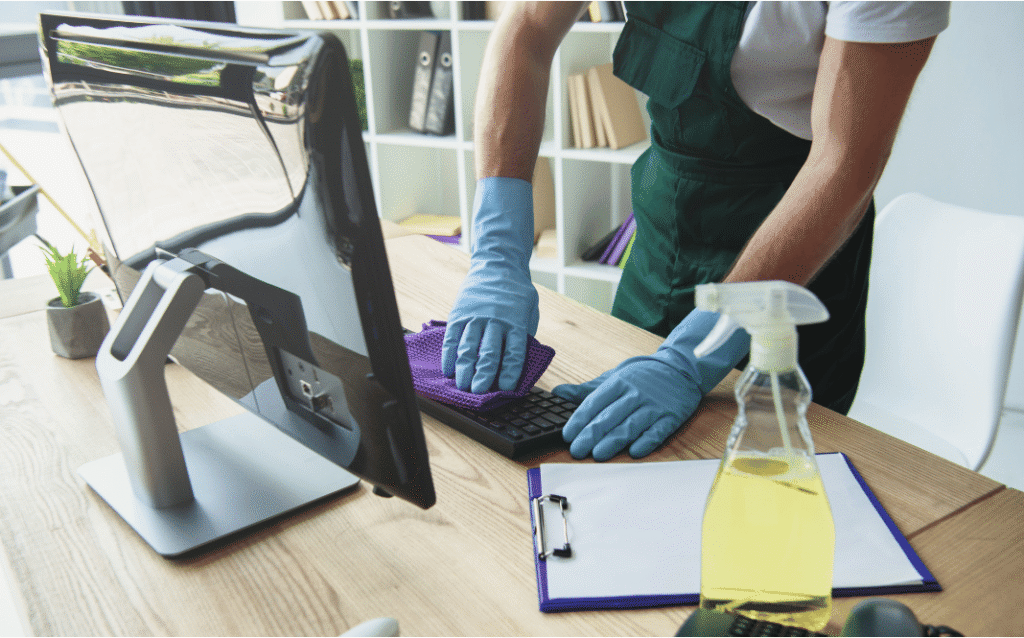
Door handles, light switches, shared desks, keyboards, and elevator buttons are touched dozens—sometimes hundreds—of times per day. Daily disinfection of these surfaces significantly reduces the spread of germs and viruses, particularly important in the post-COVID workplace.
Restroom Maintenance
Daily restroom cleaning includes sanitizing toilets and sinks, restocking soap, paper towels, and toilet paper, and eliminating odors. Restrooms left unchecked for more than a day in a busy office become a health and hygiene problem fast.
Common Area Cleaning
Vacuuming and mopping floors, wiping down kitchen and break room surfaces, and emptying garbage and recycling bins all fall under daily cleaning. Common areas see constant foot traffic and food-related mess—both of which require consistent attention.
Office Appearance Maintenance
Daily cleaning also covers dust removal, spot cleaning windows and glass partitions, and keeping entrances and reception areas presentable. First impressions start at the front door.
What Does Weekly Office Cleaning Include?
Weekly cleaning goes deeper, tackling tasks that don’t need daily attention but still require regular upkeep.
Deep Floor Cleaning
This includes thorough carpet vacuuming, hard floor care, and removing dirt that accumulates beneath furniture and in corners. Weekly floor maintenance keeps surfaces looking fresh and prevents long-term damage.
Detailed Dusting and Cleaning
Office furniture, shelving, blinds, vents, and hard-to-reach areas collect dust over time. Weekly cleaning addresses these spots that daily cleaning often doesn’t reach.
Kitchen and Break Room Deep Cleaning
Beyond the daily wipe-down, weekly cleaning includes sanitizing appliances like microwaves and coffee machines, cleaning cabinet fronts, and scrubbing countertops and sinks more thoroughly.
Benefits of Daily Office Cleaning
Creates a Healthier Workplace
Bacteria and viruses thrive on high-touch surfaces. Daily disinfection in high-traffic environments significantly reduces transmission rates of illness—keeping your team healthier and your absenteeism rates lower.
Maintains a Professional Business Image
Clients, customers, and job candidates form impressions quickly. A clean, well-maintained office signals professionalism and attention to detail. Daily cleaning keeps your space ready at all times—not just on days you know visitors are coming.
Prevents Dirt and Damage From Building Up
Daily maintenance stops small messes from becoming costly problems. Spills cleaned up promptly don’t stain. Dirt removed regularly doesn’t grind into flooring. Consistent upkeep extends the life of your office assets.
Benefits of Weekly Office Cleaning
A Cost-Effective Option for Smaller Offices
For businesses with fewer employees and lower foot traffic, daily cleaning is often unnecessary—and expensive. Weekly service meets the actual cleaning demand without overspending.
Keeps Facilities Well-Maintained
Weekly cleaning handles routine needs—dusting, floor care, deep kitchen cleaning—without over-servicing spaces that simply don’t get that dirty between visits.
Works Well With In-House Maintenance
Many small offices handle light tidying in-house: wiping desks, washing dishes, taking out garbage. Weekly professional cleaning complements these habits, handling the deeper tasks that employees shouldn’t be responsible for.
Which Businesses Need Daily Office Cleaning?
Daily cleaning is the right call for businesses where health standards are high, foot traffic is heavy, or the cost of an unclean environment is significant. This includes:
- Medical and dental offices – hygiene and infection control are non-negotiable
- Restaurants and food businesses – health codes require it
- Large corporate offices – high employee counts mean rapid accumulation of mess
- Schools and childcare facilities – children are especially vulnerable to germs
- High-traffic retail locations – customer-facing spaces must always be presentable
- Any workplace with 50+ employees
Which Businesses Can Benefit From Weekly Office Cleaning?
Smaller or lower-traffic workplaces can maintain cleanliness without daily service:
- Small professional offices (law firms, accounting practices, consultancies)
- Low-traffic workplaces where few external visitors come through
- Remote-first businesses with limited in-office days
- Businesses with fewer than 20 employees where messes accumulate slowly
What Factors Should You Consider When Choosing a Cleaning Schedule?
Use these criteria to determine the right frequency for your business:
- Number of employees – more people means more mess, more frequently
- Customer and visitor traffic – client-facing businesses need to be consistently presentable
- Industry requirements – some industries have regulated cleanliness standards
- Office size – larger spaces take longer to get dirty, but also take more effort to clean
- Workplace health concerns – allergy sufferers, immune-compromised employees, or high-risk industries may warrant more frequent cleaning
- Budget – daily cleaning costs more; weekly cleaning saves money but may not be sufficient
- Type of business operations – food handling, manufacturing, or healthcare each bring unique cleaning requirements
Can Businesses Combine Daily and Weekly Cleaning Services?
Yes—and for many businesses, a hybrid schedule is the smartest approach.
A typical hybrid cleaning plan might look like this:
- Daily: Restroom sanitation, garbage removal, high-touch surface disinfection, and common area tidying
- Weekly: Deep floor cleaning, detailed dusting, kitchen and break room deep cleaning
- Monthly: Detailed cleaning of vents, blinds, behind appliances, and other less-frequent tasks
This structure gives businesses the health and appearance benefits of frequent cleaning where it matters most, while avoiding unnecessary costs in areas that don’t need daily attention. A professional cleaning company can customize this plan around your specific operations, layout, and budget.
How Professional Commercial Cleaners Help Businesses Maintain a Cleaner Workplace
Hiring a professional commercial cleaning service goes beyond simply having someone mop the floors. The real value lies in:
- Consistent standards – professional cleaners follow structured checklists, so nothing gets missed
- Trained staff – cleaning professionals understand which products work on which surfaces, and how to sanitize effectively
- Proper equipment – commercial-grade vacuums, floor buffers, and disinfectants outperform the average office supply closet
- Customized schedules – a good commercial cleaning provider will assess your specific needs and build a plan accordingly, rather than offering a one-size-fits-all package
Finding the Right Cleaning Frequency for Your Business
There’s no universal answer to how often an office should be cleaned. The right schedule is the one that matches your actual cleaning demands—not one that’s too infrequent to protect your team’s health, and not one that costs more than necessary.
For most businesses, the decision comes down to this: if you have high foot traffic, many employees, or work in a health-sensitive industry, daily cleaning is worth the investment. If your office is small, low-traffic, and largely self-contained, weekly cleaning—potentially supplemented with in-house tidying—will serve you well.
When in doubt, consult a professional commercial cleaning company. Modern Shine offers free estimates for your office building! Get in touch today.